Flowmeter

What is Flowmeter?


A flow meter (or a flow sensor) is type of flow instrument that is used to indicate the amount of liquid, gas, or vapor moving through a pipe or conduit by measuring linear, non-linear, mass, or volumetric flow rates. Since flow control is often essential, measuring the flow of liquids and gasses is a critical need for many industrial applications – and there are many different types of flow meters that can be utilized depending on the nature of the application.

Technology First

We offer a variety of transmission components

Accurate measurement

Flow meters provide accurate measurement of fluid flow rates, which makes it possible for businesses to monitor processes and identify issues that can damage processes, employees, or equipment. They help management develop methods to improve product quality, eliminate waste, and enhance manufacturing processes.

Low cost

A major selling point for an investment in flow meters is their low cost, which makes it possible to make a small investment to gain precise measurement data to help improve efficiencies, minimize waste, and lower labor costs. Additionally, flow meters require little maintenance, are long lasting, and do not necessitate any upkeep.

Versatility

It can easily be said that there is a flow meter for any type of application that has a volumetric transfer or transport of air, gas, water, or liquids. This versatility makes it possible to find a flow meter that can provide protection, monitor flow, and collect data for any application or condition. They can be mounted on pipes, placed above channels, and be placed in the flow or on the walls of pipes and not prohibit or interfere with the flow.

Easily installed

One of the primary reasons that flow meters are so widely used is due to how easily they can be installed and adapted to an existing system. This aspect of flow meters makes it possible for organizations to use a flow meter for collecting data, monitoring flow movement, and determining gas and liquid use. The assessment of the data assists in decisions regarding the viability of a product and the amount of an asset that is necessary to manufacture the product.


CNC machining Manufactruing process


Excellent product quality

The company's products are made of high-quality materials from accessories to chips, ensuring their durability and meeting the on-site needs of customers in various industries.

Professional technical services

Is its commitment to pre- and after-sales support. The company's team of experts are on hand to provide advice and guidance to customers, ensuring they make informed decisions about their technology needs. The company also offers ongoing support and maintenance services, ensuring that customers' systems are performing at their best at all times.
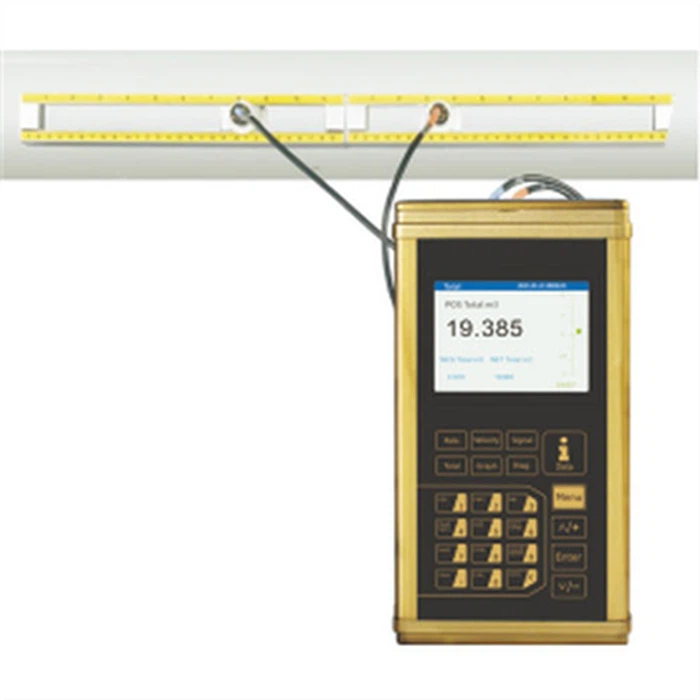
Ultrasonic Flowmeter Portable
SLD-NF Series Intelligent Control Valve

Specialized customized services

Company offers customization options to its customers, enabling them to personalize their orders according to their specific preferences.

Efficient execution efficiency

Has developed streamlined processes for delivering its products and services, ensuring that customers receive their orders on time and with minimal delay. This efficiency also extends to the company's professional services, which are delivered by a team of experienced technicians and engineers.


Types of Flowmeter
 
 
Vortex water flowmeter

The Vortex Water Flow Meter is well-suited for a range of applications, from water treatment plants to industrial processes. Its ability to measure flow rates regardless of the direction or viscosity of the fluid makes it ideal for a variety of fluids, including liquids, gases, and even steam. Whether you're looking to improve your system's efficiency or accurately bill for water usage, the Vortex Water Flow Meter is the perfect solution.

 
Rotameter type flowmeter

Rotameter type flow meter uses advanced technology to provide precise and reliable measurement of liquid and gas flow rates, making it an essential tool for process optimization. Its easy installation and maintenance features offer users a hassle-free experience, while its wide range of measurement options makes it suitable for diverse fluids.

 
Electromagnetic flowmeter

One of the biggest advantages of using our electromagnetic flow meter is our capacity to measure fluids with high levels of solids or bubbles without any disruptions, thanks to the non-invasive design that doesn't obstruct the flow being measured. And to enable easy access and maintenance, the product features an intuitive and user-friendly interface.

 
Ultrasonic flowmeter

One of the key advantages of the Ultrasonic Flow Meter is its non-invasive technology. This means that it can accurately measure the flow rate of liquids without the need for any cutting, drilling, or dismantling of pipes. Additionally, it can be used for a wide range of applications, such as measuring the flow rate of water, chemicals, or other liquids in industries from manufacturing to agriculture to wastewater treatment.


The Purpose of Flowmeter
Insertion Type Electromagnetic Flow Meter
 

Flowmeter in disinfection dosing

In wastewater treatment, the untreated water from all the vertical wells is collected in deep containers during waterworks. To decrease the phvalue of untreated water, soda ash neutralizing compound is used in the chemical treatment of water. Flow meters are used here too.

Vortex Water Flow Meter
 

Old water pipelines flow monitoring

In wastewater treatment, the untreated water from all the vertical wells is collected in deep containers during waterworks. To decrease the phvalue of untreated water, soda ash neutralizing compound is used in the chemical treatment of water. Flow meters are used here too.

Thermal Mass Flow Transmitter
 

Flowmeter in water distribution networks

While choosing a flowmeter for a water distribution network, accuracy is an important criterion, because the flow rate of potable water is already affected by different geographical conditions.Another challenge associated with some remote water distribution networks is unavailability of Electricity; thus a Lithium battery-powered flow meter is the solution.

Rotameter Type Flow Meter
 

Wastewater treatment

In the wastewater treatment process, the untreated water flows through a series of treatment stages. First, it enters into automatic screening equipment which removes objects such as wood pieces, rags, grease, and plastics.An electromagnetic flow meter is installed in the untreated water inlet of the pre-purification system along with either PTFE liners, a thin layer bonded to other polymers through a thermal lamination which guarantees a high degree of resistance to abrasive media and solids.


Flowmeter Installation


Flowmeter installation key points

There are several factors to consider when installing a flow meter with the most essential part of the process being the location of a flow meter. In the majority of cases, and to ensure proper readings, flow meters are installed on a straight length of pipe away from elbows, tees, valves, fans, and pumps, which are common causes of turbulence in piping systems.

Phase of the media

The fluid or gas that is to be measured must be a single phase media, meaning it is a gas or liquid. Two phase media are difficult to measure and provide inaccurate readings.

Positioning of the flowmeter

The orientation of a flow meter affects the precision of its readings, its accuracy, and overall performance. Flow meters are installed on straight pipes in any direction with 10 diameters upstream and 5 diameters downstream. For their most efficient operation, they are placed away from magnetic fields and vibrations, which can affect their readings. There are a wide variety of installation configurations with ones that are connected to piping such that the flow goes through the flow meter while other installations are merely sensors that are attached to the walls of the piping.

Flowmeter requirement

A flow meter, whether it is for gas or liquid, must always be placed such that it is always filled with fluid with an escape for the removal of second phase media. For gas and steam flow meters in horizontal piping, the flow meter should be placed at a high point to enable any condensation to drain out of the piping.


How to Maintain Flowmeter
 

Monitor the working status of the display instrument (switch to the “self-calibration” block), evaluate the readings of the display instrument, and check-in time if any abnormality happens.


Keep the filter unblocked, and the filter is blocked by impurities. It can be judged from the increase in the pressure gauge readings at the inlet and outlet and cleared in time, otherwise, the blockage will reduce the flow rate. Periodically discharge the gas escaping from the liquid in the getter.


In conclusion, regular maintenance can ensure the long-term stable operation of theflowmeter. The maintenance of instrumentation is a long-term process, and the same is true for other instruments.


Regularly disassemble, clean, inspect and recalibrate the flowmeter; for flowmeter equipped with lubricating oil or cleaning fluid injection ports, lubricating oil or cleaning fluid should be injected regularly according to the requirements of the manual to maintain the good operation of the impeller. If there is abnormal sound from the impeller, the internal parts of the flowmeter should be removed and inspected in time. When bearings and shafts are severely worn, they should be replaced and re-calibrated.


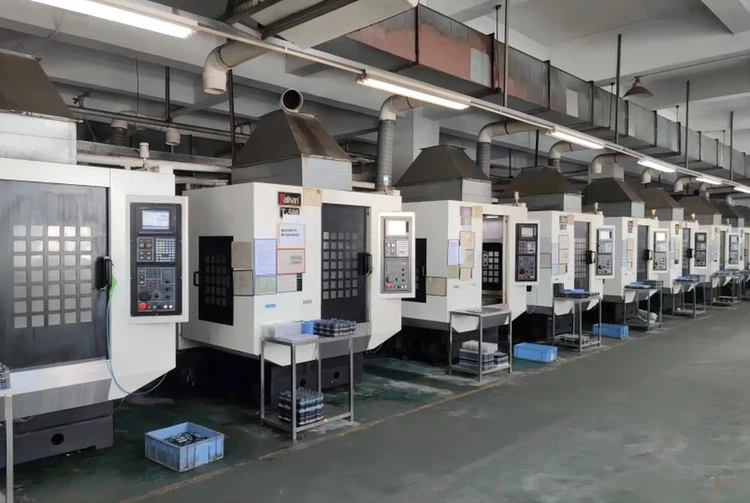
Our Factory


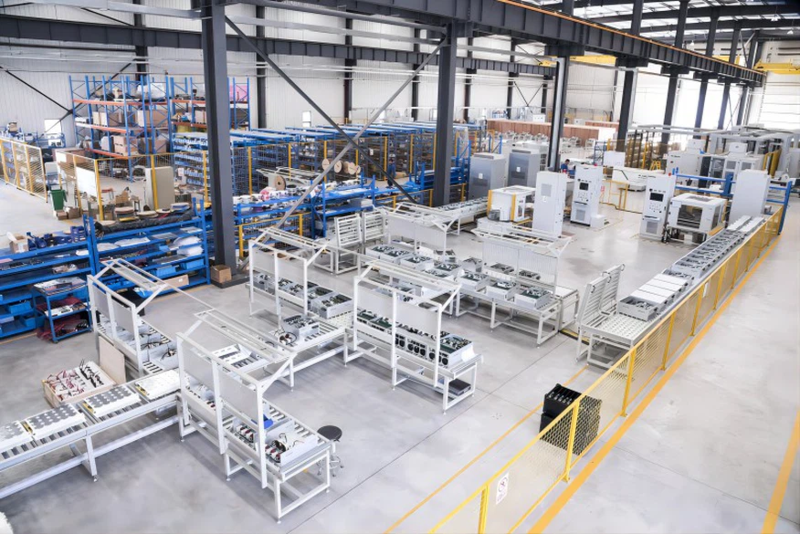
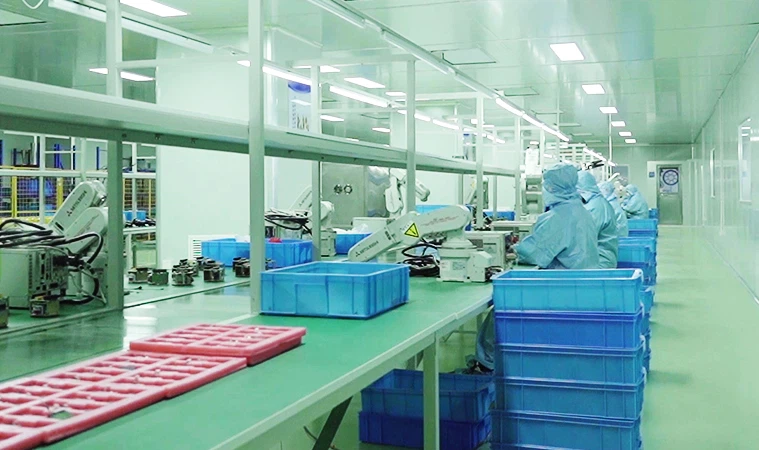
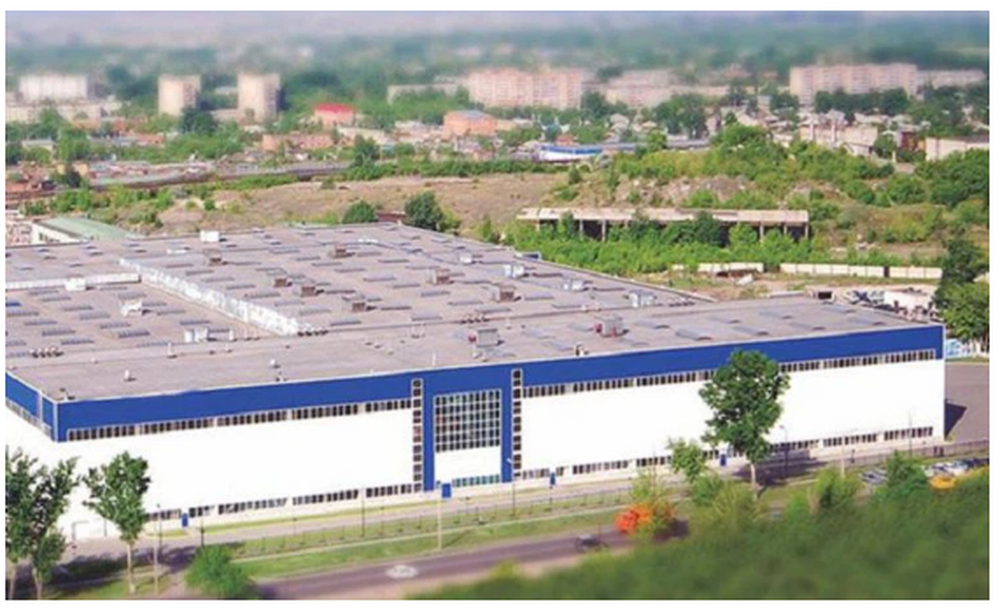
As a leader in advanced automation technology, committed to providing excellent products and services for a wide range of fields such as smart cities, smart resource utilization, high efficiency and energy saving, and smart factories.

202308041642523f750ae9a8fa4447b693843e71e2ffdc.webp (750×503)
20230804162810b35c82ad28bb4b9d9a9b2318377691ce.jpg (1000×677)
20230804164235f8142e2e078b4ea1aab486c54a6d8983.webp (750×501)
20230529132851cc9c4ceae7f04e6da7fd5d73de8c158f.jpg (750×450)
20230614123654fa178cfc26d2474fa81cfc86fa44dfaa.jpg (759×450)
20230804162611e88b6b3821f94fdb8d70544e9467f6fa.png (1000×609)


Certifications
 
20230529131849ca3bc47db5d3418d987fd2eb9ae8e002.jpg (500×750)
202305291319158d6720e001874bddbee41a6d869de1a9.jpg (500×750)
20230529131945911234b650cf496e9e925e54bdac6ab8.jpg (500×750)
202305291320091523c74000cc4c88a36c4b5c38bc10bc.jpg (500×750)
20230529132028ba5a0dced612429eabc6a55f3cfab470.jpg (500×750)


FAQ


Q: What is flow meter used for?

A: A flow meter is a device that measures how much liquid or gas moves through a pipeline in a given period of time. By measuring flow rates, flow meters provide crucial visibility into what's flowing where, within pipes, drainage systems, and other types of infrastructure.

Q: How does an electric flow meter work?

A: Electromagnetic flow meters detect flow by using Faraday's Law of induction. Inside an electromagnetic flow meter, there is an electromagnetic coil that generates a magnetic field, and electrodes that capture electromotive force.

Q: What is flow meter method?

A: The flow meter is used in mining, oil and gas, chemical, and power plants. The main purpose of the flow meter is used to measure the quantity of material flowing in the pipelines, it means to calculate the flow rate of a substance through a specified flow section.

Q: What is the purpose of the air flow meter?

A: An air flow meter is a device that measures air flow, i.e. how much air is flowing through a tube. It does not measure the volume of the air passing through the tube, it measures the mass of air flowing through the device per unit time.

Q: What is the most commonly used flow meter?

A: Differential pressure flow meters are, by far, the most common units in use today. These meters, which boast high accuracy, calculate fluid flow by reading pressure loss across a pipe restriction. Estimates are that over 50 percent of all liquid flow measurement applications use this type of unit.

Q: Who uses flow meters?

A: The oil industry uses flow meters to measure the volume of oil flowing from one point to the other. The natural gas industry uses flow meters for the same reasons as the oil industry. They need flow meters to show and record how much gas is flowing and processing.

Q: Do flow meters control flow?

A: Flow meters are devices used in fluid systems to measure linear, nonlinear, volumetric or mass flow rate of a liquid or a gas. They have many different applications and can be fitted with an integrated flow control valve to control output flow.

Q: How does a flow meter calculate flow?

A: More often than not, flowmeters use indirect measurement principles to calculate the flow of fluids. In these cases, a change in a physical parameter such as temperature or pressure is measured. This measured change is then used in a formula for calculating the flow of the liquid or gas.

Q: What is the difference between flow rate and flow meter?

A: In mass flow meters, the flow rate is calculated by measuring the amount of mass of a substance passing through a device for a given amount of time. In volumetric flow meters, the flow rate is calculated by measuring the volume of a substance through a device over a given period.

Q: What flow meter is used for air?

A: Depending on the type of application, the Air Flow Meter is made as a hot-wire Air Flow Meter, a vane Air Flow Meter, a cup anemometer, a Pitot tube air flow meter or a pocket weather flow meter, all of which can measure air velocity as well as air pressure. Some can even detect the wind direction.

Q: What is the function of flow meter and pressure switch?

A: A flow switch monitors the flow rate of the media moving through a process line and a pressure switch monitors the pressure within a process line or pipe or vessel. Both pressure switches and flow switches essentially perform the same function, acting as a trigger for a function.

Q: What is the difference between a flowmeter and a rotameter?

A: There is no difference between a variable area flow meter, rotameter, or a flow meter, and these terms are interchangeable. Inside a variable area flow meter, a gas or liquid moves a float until it reaches equilibrium - the technique to measure the flow rate.

Q: Which type of flowmeter is used for measuring water flow?

A: Mechanical, or positive displacement, flow meters.Therefore the gear spins and this rate is proportional to the water flow rate and can be converted to a volumetric flow rate, as is the goal of a flow meter. Mechanical flow meters are most commonly used due to their simplicity and easy conceptual understanding.

Q: Which type of flowmeter is most accurate?

A: Coriolis flow meter accuracy is among the highest for flow meter technologies. It is often used for verifying the accuracy of other flow meters by running them simultaneously and referencing the measured values between the two. Typical Coriolis flow meter accuracy ranges from 0.1% to 0.5%.

Q: What is the most reliable flow meter?

A: Coriolis meters are generally considered the most repeatably accurate flow meters available today.

Q: Is flowmeter active or passive?

A: A passive output means the flowmeter is externally powered. An active output means the flowmeter is internally powered such as 4 wire device. It appears you are asking about a pulse output. An analog such as 4-20mA signal would be the same passive = external and active = internal power.

Q: Where do you read a flow meter from?

A: To avoid this visual distortion and ensure the most accurate reading of the flow rate, read the flow meter from a close distance, straight in front of the meter, with your eye as level to the float as possible.

Q: What is the output of flow meter?

A: When fluid is going through the flow sensor, a Hall Effect transistor is turned on and off by magnets in the six-spoke rotor. Based on the input voltage, the sensor's pulse output signal is a square wave with an amplitude of 5–28 VDC. At each meter's max flow rate, the output frequency ranges to 240 Hz.

Q: What is the accuracy of a flowmeter?

A: Flow meter accuracy is how close the measurement is to the true value. In flow meters, that means how close the output of the meter is to its calibration curve. This is expressed as a percentage, e.g. ±1%. It means that any given reading can be in error 1% above or below the calibration curve.

Q: What can be measured by a flowmeter?

A: A flow meter (or a flow sensor) is type of flow instrument that is used to indicate the amount of liquid, gas, or vapor moving through a pipe or conduit by measuring linear, non-linear, mass, or volumetric flow rates.

Solidat Applied Technologies Ltd. is one of the leading flowmeter manufacturers and suppliers in China. We warmly welcome you to buy flowmeter in stock here from our factory. All customized products are with high quality and competitive price. Contact us for quotation.

Insertion Ultrasonic Flow Meter, Flow, The Mass Air Flow Sensor

(0/10)

clearall