Level Switch

What is Level Switch?


Level switch is an electrical or mechanical method for measuring the level of a liquid, powder, or granule material. It is designed to activate an alarm if the material level in a container passes a predetermined height or depth. When a level switch detects that a tank is full, it is referred to as full or upper limit detection. If the level of the material drops, indicating that the tank is nearly empty, the switch will also provide an alert, which is referred to as empty or low level detection.


Advantages of Level Switch


Strong versatility

It can measure liquid level and material level, can meet the measurement requirements of different temperatures, pressures, and media, and can be used in harsh situations such as corrosion and impact.

Reduces waste

Controlling how liquid and bulk materials are stored helps to prevent spills and overflows, which reduces waste.Continuous level measurement level switches ensure that the right amount of raw materials is always present. When a container is too full or the level is too low, point level detector level switches have the ability to emit an alarm.

Data automation

Level switches have the ability to automatically deliver precise data on time to a computer without the need to activate or initiate another device, in contrast to floats, yardsticks, and other product level monitoring techniques. When the level switch is not wired to a controller, it is simple to read the data from a digital or analogue display.

Accurate and reliable

Level switches are made using casings and materials that guarantee they will give precise, accurate readings for a long period. Level switches don’t need repairs or maintenance because they have few moving parts, which allows them to accumulate data. To ensure a level switch’s accuracy, minor calibrations and modifications could be required, but failure is quite unusual.


First 12 Last 1/2
Why Choose Us

Excellent product quality

The company's products are made of high-quality materials from accessories to chips, ensuring their durability and meeting the on-site needs of customers in various industries.

Professional technical services

Is its commitment to pre- and after-sales support. The company's team of experts are on hand to provide advice and guidance to customers, ensuring they make informed decisions about their technology needs. The company also offers ongoing support and maintenance services, ensuring that customers' systems are performing at their best at all times.

SLD-NF Series Intelligent Control Valve
SLDL1610 Vibrating Rod Material Level Switch

Specialized customized services

Company offers customization options to its customers, enabling them to personalize their orders according to their specific preferences.

Efficient execution efficiency

Has developed streamlined processes for delivering its products and services, ensuring that customers receive their orders on time and with minimal delay. This efficiency also extends to the company's professional services, which are delivered by a team of experienced technicians and engineers.


Types of Level Switch
 
 
Capacitive level switche

Capacitive level switches are designed to measure corrosive liquids, high temperatures, and liquid levels in sealed containers. A capacitive level switch works on the principle of capacitance. It has an electrode that changes when the height of the medium changes and causes its capacitance, the ratio of its electrical charge, to change. The sensing mechanism changes the level or height of the medium into a current signal transmitted to a secondary instrument or computer.

 
Conductivity level switches

Conductivity level switches have sophisticated and highly sensitive sensors that record slight changes in the level of a liquid. They have conductive probes that are completely insulated electrodes except for their tips to avoid electrical bridging. The probes work by the variations of the electrical resistance between them, with one electrode being the reference electrode and the other being the level control electrode.

 
Displacer level switch

Displacer level switches are designed to work where there are high temperatures and pressure. They have a weight, which is its displacer, suspended on a spring that is heavier than the media. When the media makes contact with the displacer, buoyancy force is produced that changes the weight of the displacer and causes the spring to retract. As the spring retracts, it sends a magnet upward that actuates the switching element.

 
Hydrostatic level switches

Hydrostatic level switches are a threshold contact that contains a pressure switch or pressure sensor placed in a solid state NPN or PNP switch. All liquids are influenced by gravity and produce hydrostatic pressure, which is similar to the weight of a solid object. With liquids, it is possible to measure the weight of the liquid in relation to its level. The weight of the liquid at different levels is proportional to a specific level.


SLDL2850 Series SonarDetect External Ultrasonic Liquid Level Switch


How a Level Switch Works

Though the function of a level switch is rather simple and fundamental, they are an essential part of a system designed to protect resources and equipment. Any process that relies on bulk materials or liquids has to maintain and control the quantities and volume of the material. Several highly technical computerized forms of software are designed for that function. In many cases, level switches are the main component for supplying data and monitoring materials.

Level switches keep processes rolling and assist in controlling inventories by providing data and measurements. They detect volume errors and send alarms to notify users of any problems.


Sensor component
 

Sensor component

The main component of a level switch is its sensor, which can be point level detection or continuous level measurement. Point level sensor indicators include capacitance, optical, conductivity, vibrating or tuning fork, and float switch. Sensors for continuous level measurement are ultrasonic, microwave, and radar.


Output signal

The output signals for a level switch can be serial or parallel, depending on the type of level switch and its design. Serial output is a method of communication between a computer and its peripherals, which, in this case, is a level switch. The data is sent sequentially with a starting point and stopping point.


Interface

There are various displays available for level switches, with some types being more precise and accurate than others. The three most common types that are used for industrial processes are analog, digital, and video. In the majority of cases, computers are used to control and accept the data.

Certain variations of level switches have unit displays where settings can be made on the switch.
Analog – As with all analog displays, there is a dial, button, or needle used to set the parameters of the switch.
Digital – Digital displays are the most user friendly and have numerical readings that can be used to set the levels for the level switch. The display is normally lit and has a method for entering or reading data.Computer – More and more systems are connecting level switches to computers to receive the output data, whether it is serial or parallel. A computer is capable of arranging the data and providing a video display.

How to Choose the Right Level Switch
80 GHz Radar Level Transmitter
 

Level switch material

Level switches are made from every type of material conceivable. When determining what level switch to buy, it is important that the level switch be compatible with the material it will be monitoring.Make level switches from brass, stainless steel, and various forms of plastic. All of these materials can be used with wet materials that are non corrosive.

SLDL5400 Microwave Level Switch
 

Electrical requirements

For a level switch to work properly, its electrical connection must match its power supply. Insufficient power supply or over supply can lead to poor performance of the level switch or non-activation.

High Temperature Liquid Level Switches
 

Material pressure

All materials produce pressure due to their weight. When choosing a level switch, it is important to understand if the materials being monitored will place pressure on the level switch. If that is the case, there are level switches designed from materials capable of withstanding high pressure conditions.

Multi Point Level Switch
 

Switch output

Level switches can produce different types of output, which can be a relay, analog, or digital. The type of output has to match the controller that will be receiving the data. The selection includes the type of time delay that can differentiate between using parallel or serial output.


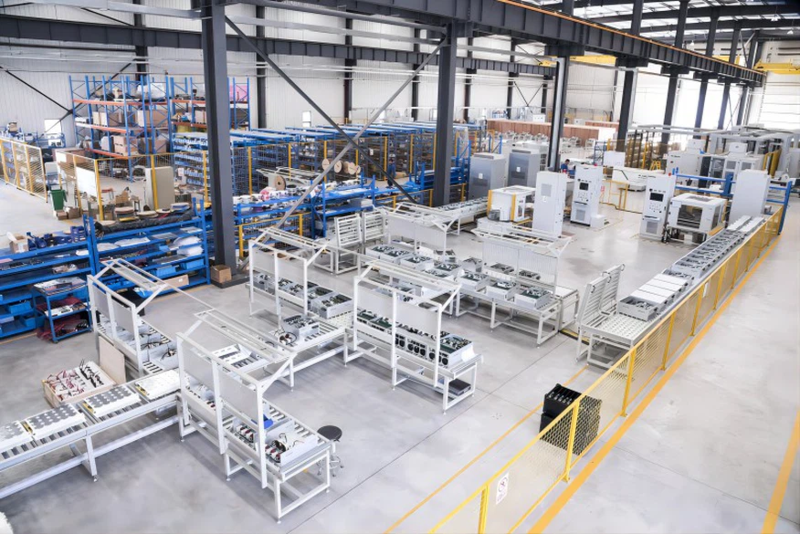
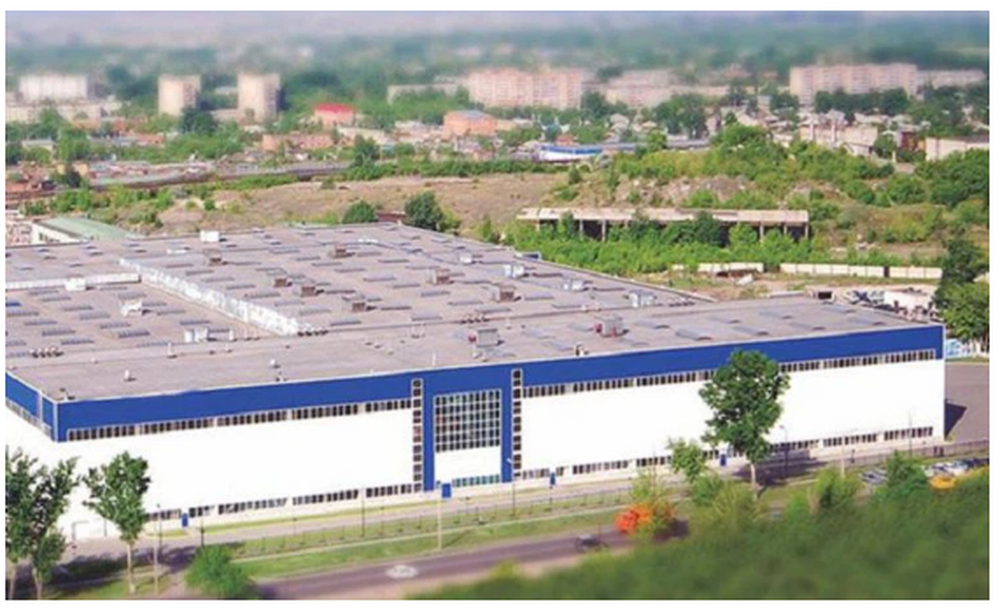
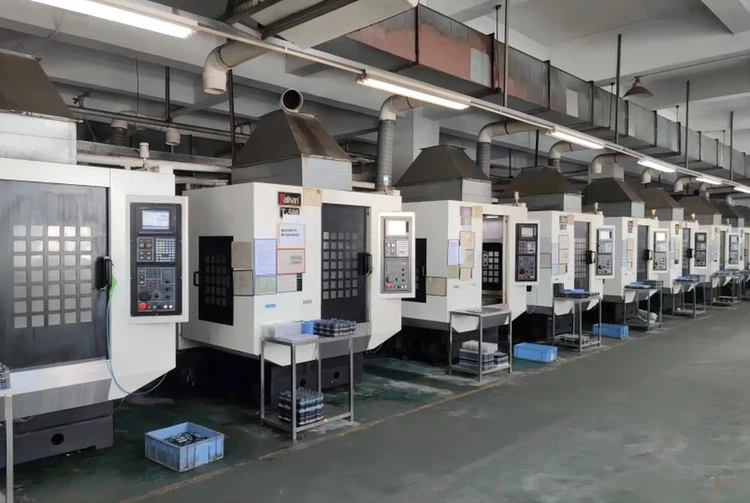
Our Factory


As a leader in advanced automation technology, committed to providing excellent products and services for a wide range of fields such as smart cities, smart resource utilization, high efficiency and energy saving, and smart factories.

202308041642523f750ae9a8fa4447b693843e71e2ffdc.webp (750×503)
20230804162810b35c82ad28bb4b9d9a9b2318377691ce.jpg (1000×677)
20230804164235f8142e2e078b4ea1aab486c54a6d8983.webp (750×501)
20230529132851cc9c4ceae7f04e6da7fd5d73de8c158f.jpg (750×450)
20230614123654fa178cfc26d2474fa81cfc86fa44dfaa.jpg (759×450)
20230804162611e88b6b3821f94fdb8d70544e9467f6fa.png (1000×609)


Certifications
 
20230529131849ca3bc47db5d3418d987fd2eb9ae8e002.jpg (500×750)
202305291319158d6720e001874bddbee41a6d869de1a9.jpg (500×750)
20230529131945911234b650cf496e9e925e54bdac6ab8.jpg (500×750)
202305291320091523c74000cc4c88a36c4b5c38bc10bc.jpg (500×750)
20230529132028ba5a0dced612429eabc6a55f3cfab470.jpg (500×750)


FAQ
 

Q: What is a level switch?

A: A level switch is a sensor that detects the presence of liquids, powder, or granulated materials at a specific location. (It is also referred to as level sensor) For example, when a tank is supplied with liquid, it overflow.In order to prevent overflows, a level switch is installed near the top of the tank.

Q: Where are level switches used?

A: These devices equip electrodes to detect liquid levels. They have been widely used in water works and sewers for buildings and housing complexes, industrial facilities and equipment, water treatment plants and sewage treatment facilities, and many other applications.

Q: What is difference between level switch and level transmitter?

A: A level switch is a device that operates by sensing the fluid level and turning it off or on, depending on the result. On the other hand, a level transmitter works by continuously measuring the level and transmitting data to a controller.

Q: Is level switch and float switch same?

A: Known as level switches or float switches – these are used to trigger the opening or closing mechanism depending on the level of fluid within a chamber. As an example; inside a boiler or a cistern, level switches are used to understand when a suitable amount of water is present in order to activate the valve.

Q: How accurate are level switches?

A: The accuracy of level switches is ±1/8˝ (3.2 mm) of true liquid level. In order to assure the proper accuracy for your liquid, please specify the specific gravity of the media.Will automatically calibrate for the submergence of the float, based on this specific gravity information.

Q: What are the benefits of level sensor?

A: They are also an important part of process control systems which manages flow rate into and out of a storage vat or reactor. Level sensors can be used for high or low level sensing and alarms, leak detection, overfill shutoff and regulating the interface between levels of different media.

Q: What is level control system?

A: In level-control systems, fluid flow rates are controlled by varying the degree of opening of a gate-type valve. Because of the forces involved, a pneumatic 'actuator' is normally employed, working off a controlled pressure in the range between 3-15 pounds per square inch (i.e. psi).

Q: Is level switch analog or digital?

A: For this, two types of instruments are used – level switch and level transmitter. A level switch is a digital input instrument, whereas a level transmitter is an analog input transmitter.

Q: What is float level switch?

A: A float switch is a type of level sensor, a device used to detect the level of liquid within a tank. The switch may be used to control a pump, as an indicator, an alarm, or to control other devices.

Q: What is level transmitter level switch?

A: They are mainly divided into two categories: Level Transmitters and Level Swithes. Level Transmitters continuously measures the amount of storage in a container from 0 to 100%. On the other hand, Level Switches are pinpoint detection when a specific level is reached.

Q: What are the benefits of float switches?

A: Float switches provide a simple, effective and reliable level measurement solution. Perfect for point-level detection, magnetic float switches offer easy-to-install, retrofittable continuous level measurement solutions for a wide range of industrial applications.

Q: What is the importance of level switch?

A: A level switch is an electrical or mechanical method for measuring the level of a liquid, powder, or granule material. Level switches are an essential part of production operations and are used in harsh conditions with extremes in temperature, pressure, and vibrations.

Q: What is the output of a level switch?

A: The output of a level switch may or may not be voltage-dependent. At times, it may have a voltage-free contact, or sometimes it may have a fixed voltage 0-12 voltage. The level transmitter is set with a variable output signal of 4-20 ma.

Q: What is the principle of float level switch?

A: All float operated liquid level controls operate on the basic buoyancy principle which states “the buoyancy force action on an object is equal to the mass of liquid displaced by the object.” As a result, floats ride on the liquid surface partially submerged and move the same distance the liquid level moves.

Q: What is the working principle of high level switch?

A: The level switch working principle is; that once the float moves by the raise within the level of water then the output contact will be changed & it specifies the position of the water level. For instance, once a tank is supplied with water, then it overflows.

Q: What activates a float switch?

A: A sump pump float switch detects a rise in water in a sump pump. Commonly installed in the normally closed position, the electrical circuit will close as the water rises. This allows current to pass to signal a pump to pump water out of the tank.

Q: Can we use float switch without contactor?

A: Conductivity level switches are sensors with an electrical contact output at a specific liquid level. Applications include ponds, reservoirs, sumps, pharmaceuticals, closed vessels and open tanks.

Q: What type of sensor is required in level switch?

A: Sensors like conductivity or resistance, capacitance, Tuning Fork, float switches, and optical level sensors can be used to indicate a high or low level. While ultrasonic and radar level sensors can measure your level to give specific feedback to how much of product is in a tank.

Q: What is a level switch engineering?

A: A level switch is an instrument used to detect the level of a liquid, powder, or granulated material within a container. There are few different types of level switches, but they all serve the same purpose.

Solidat Applied Technologies Ltd. is one of the leading level switch manufacturers and suppliers in China. We warmly welcome you to buy level switch in stock here from our factory. All customized products are with high quality and competitive price. Contact us for quotation.

Multi Point Level Switch, Magnetic Level Gauge Switch, Tuning Fork Level Switch

(0/10)

clearall