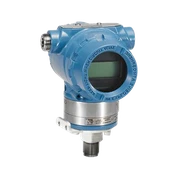
SLDL2560 series SonarSilt Ultrasonic Sludge Level Meter
What is an ultrasonic sludge level meter? The ultrasonic sludge level meter uses a sensor to emit acoustic pulses to the bottom of the clarifier or tank to detect the position of the interface or floc media layer. The sound waves are reflected back to the sensor through the interface. After...

- Product Introduction
Solidat Applied Technologies Ltd. is one of the leading manufacturers and suppliers of sldl2560 series sonarsilt ultrasonic sludge level meter, also supports customized service. Please feel free to buy high quality products in stock here and get quotation from our factory. Good service and reasonable price are available.
What is an ultrasonic sludge level meter?
The ultrasonic sludge level meter uses a sensor to emit acoustic pulses to the bottom of the clarifier or tank to detect the position of the interface or floc media layer. The sound waves are reflected back to the sensor through the interface. After being processed by the transmitter, the distance reading and height output are obtained.
The multi layer sludge analysis system uses the principle of high-frequency sound waves to analyze different liquid concentrations by measuring sound speed and energy attenuation. Parameters such as sound speed and energy intensity are collected through mobile sensors. After analyzing the data, the software can obtain the height of the clear liquid layer, sedimentation layer, and silt layer to achieve simultaneous measurement of multiple parameters.
Ultrasonic sludge bed level gauge uses enhanced ultrasonic technology to measure the sludge interface level in various clarifiers, sedimentation tanks and thickeners. Exceptional accuracy and reliability enable continuous, real-time measurements.


Advantages of Sonic mud-water interface meter?
Dual-frequency sensor
Dual-frequency ultrasonic sludge interface meter is an optional sensor suitable for various interface conditions.
3D profile analysis algorithm
Quantitative analysis of visual liquid stratification.
Built-in 23 interface models
Intelligent design that adapts to different working conditions with one click.
Surface ultrasonic self-cleaning function
The equipment has an automatic cleaning function to keep the surface clean.
Why do you need to measure sludge interface level?
A large amount of sludge is produced in various fields, such as industrial wastewater treatment, agricultural irrigation, and river water quality monitoring. The sludge level is the dividing line between the deposited sludge and the turbid or clear water phase above. This sludge level can be expressed by the depth from the water surface or the height from the bottom of the pool.
Effectively measuring sludge levels can optimize sludge extraction, treatment and disposal processes. By setting the alarm function of the sludge level gauge (such as relay output, etc.), sludge overflow can be effectively avoided, thereby better controlling and managing the entire sewage treatment process and improving the operating efficiency of the treatment plant.
Of course, liquid level measurement and sludge level monitoring are also crucial in wastewater treatment plants and other industrial water treatment processes. If you want to know more, you can check out our Sludge interface detector.
Why choose us?
Professional Customized Services
SOLIDAT provides professional customized services and is able to tailor suitable solutions according to the specific needs and requirements of customers. We understand that each client's needs are unique and are committed to providing personalized services to meet the various needs of our clients.
Efficient execution
We focus on efficient execution, and strictly control the time node from product design to delivery to ensure that the project is completed on time. With an experienced team and efficient workflow, SOLIDAT is able to respond quickly to customer needs and provide solutions as quickly as possible, helping customers save time and costs.
Excellent product quality
SOLIDAT takes quality as its life, all products are made of high-quality raw materials and advanced manufacturing technology, and have undergone strict quality control and testing to ensure stable and reliable product performance and strong durability. We always adhere to the principle of quality first to provide customers with high-quality products and services.
Professional technical services
We have a professional technical team with rich industry experience and professional knowledge. Whether it is product installation and commissioning, technical support or after-sales service, we are able to provide professional guidance and solutions to provide customers with a full range of technical support and service guarantee.
Application of ultrasonic sludge interface meter
- •Water & wastewater treatment clarifiers
- •Water & wastewater gravity & DAF thickeners
- •Raw water clarifiers
- •Sumps, lagoons, settling ponds
- •Industrial process thickeners
- •Salt brine tanks
- •Material inventory tanks
- •Process thickeners
Ultrasonic sludge interface meter, also known as sludge level meter, has a wide range of applications in the field of sewage treatment. It is mainly used to measure the sludge interface in sewage treatment sedimentation tanks, secondary sedimentation tanks, and sludge concentration tanks, and effectively monitor the sludge liquid level position.
In addition, sonar level sensor are also widely used in scenarios such as water plants, water supply plants (especially sedimentation tanks), sand washing plants (also sedimentation tanks), and power plants (especially mortar sedimentation tanks). Accurately measure the mud level in sedimentation tanks. Real-time monitoring of mud level changes can help operators adjust the treatment process in a timely manner to ensure the smooth operation of the sewage treatment process.
Components of Ultrasonic mud-water interface meter
The two main components of an Ultrasonic mud-water interface meter are the transducer and the controller, each of which has different characteristics:
Transducer
High-frequency ultrasonic transmitter: The transducer is one of the core components of the underwater sonar sensor and is responsible for emitting ultrasonic signals. Features include:
• High-frequency emission: The transducer is typically capable of emitting high-frequency ultrasonic signals, which allows it to penetrate liquids and reflect at the sludge interface.
• High energy output: In order to ensure the penetration and reflection of the signal, Ultrasonic mud level gauge transducers usually have a high energy output.
• Corrosion resistance: Due to the corrosive nature of the working environment, mud level gauge transducers are usually made of corrosion-resistant materials to ensure long-term stable work.
• Compact structure: For ease of installation and use, sludge interface analyzer transducers typically have a compact design that is suitable for a variety of industrial environments.
Controller
Signal processing and display unit: The controller is the intelligent control part of the ultrasonic sludge interface detector, which is responsible for receiving the signals sent by the transducer, and carrying out signal processing and display. Features include:
• High-precision signal processing: The sludge interface meter controller has high-precision signal processing capabilities, which can accurately analyze the signal sent back by the transducer and determine the sludge interface position.
• Multi-function display: The slurry interface meter controller is usually equipped with a variety of display functions, including digital display, graphic display, etc., so that users can intuitively understand the position and change trend of the sludge interface.
• Programmable control: Some sludge interface detectors have programmable control functions, and users can adjust and optimize the measurement parameters according to actual needs.
• Durable and stable: Mud water sludge interface meter controllers are usually manufactured with durable and stable electronic components to ensure long-term stable working performance and reliability.

The transducer of the underwater sonar sensor must be installed vertically to the water surface. There should be no other solid objects blocking the sludge interface meter transducer and the bottom of the pool. Otherwise, interference signals may be generated. The mud-water interface meter sensor should be protected from floating objects in the water. If suspended matter in the water easily adheres to the surface of the transducer due to impact, it is recommended to install a self-cleaning system to keep the surface of the transducer clean. The immersion depth of the transducer is recommended to be about 200mm, and the distance between the transducer and the pool wall should be at least 300mm.
Our factory

Automated production lines: We invest in advanced automated production lines to improve production efficiency and ensure product quality consistency.

Intelligent manufacturing technology: Use intelligent manufacturing technology to realize digital, networked and intelligent management of the production process.

Continuous innovation: We continuously introduce new technologies and equipment to maintain our leading position in the industry and provide customers with the most competitive solutions.
FAQ
Q: How do you measure sludge level?
A: Sludge level measurement with ultrasonic sensors
In the process, ultrasonic waves are emitted to scan the separation zones. The measured variable is the time the emitted ultrasonic signal needs to reach the solid particles in the separation zone and return again to the receiver.
Q: What is the ultrasonic method of level measurement?
A: As the name indicates, ultrasonic / level sensors measure distance by using ultrasonic waves. The sensor head emits an ultrasonic wave and receives the wave reflected back from the target. ultrasonic / level sensors measure the distance to the target by measuring the time between the emission and reception.
Q: What is the ultrasonic level indicator?
A: Ultrasonic level sensor is a kind of sensor that utilizes ultrasonic principle to measure the height of liquid level. It has the advantages of non-contact, non-invasive, high reliability, etc. It is widely used in industry, agriculture, commerce and other fields.
Q: Can ultrasound detect water level?
A: ultrasound can be used to detect water level. In water level detection applications, the sensor sends out ultrasonic pulses towards the surface of the water. When the pulses hit the water surface, they are reflected back to the sensor. By measuring the time it takes for the pulses to return, the sensor can calculate the distance between itself and the water surface, thus determining the water level.
This method is commonly used in various industries and applications such as water tanks, reservoirs, wastewater treatment plants, and industrial processes where accurate water level measurement is required.
Q: What is sludge depth?
A: Sludge depth refers to the distance from the surface of the water to the surface of the sludge. Sludge height refers to the distance from the bottom of the tank to the surface of the sludge.
Q: What is the sludge handling system?
A: Sludge handling system consists of two main systems. One is sludge press and the other is polymer preparation or additive system. As critical equipment in the sludge handling system, sludge press is in the process to dehydrate the treated sludge from low consistency to high consistency.
Q: How does the ultrasonic level gauge work?
A: It works by emitting high-frequency sound pulses across a space and then measuring the time it takes for those pulses to return as they echo off any nearby objects. The time elapsed between the initial signal and the return echo can then be used to calculate the distance between the sensor and an object.
Q: What are the disadvantages of ultrasonic level gauge?
A: Some common disadvantages of conventional ultrasonic sensors include limited testing distance, inaccurate readings, and inflexible scanning methods. All of these drawbacks, however, can be mitigated and even overcome with the right NDT tools and techniques.
Q: What is the ultrasonic level measuring instrument?
A: As the name indicates, ultrasonic / level sensors measure distance by using ultrasonic waves. The sensor head emits an ultrasonic wave and receives the wave reflected back from the target. ultrasonic / level sensors measure the distance to the target by measuring the time between the emission and reception.
Q: How accurate is the ultrasonic level measurement?
A: For example, an ultrasonic water level sensor reading a full-scale range of 32 feet or 394 inches will have an accuracy of ±0.196 inches (at ambient temperature and controlled conditions).
Q: What is the difference between silt and sediment?
A: An unconsolidated aggregate of silt particles is also termed silt, whereas a consolidated aggregate is called siltstone. Silt deposits formed by wind are known as loess, a yellow, unconsolidated rock. Sediments are seldom composed entirely of silt but rather are a mixture of clay, silt, and sand.
Q: What is a sludge tank?
A: A tank provided to receive oily residues coming from the oily water filtering or separating equipment and from the purification of fuel and lubricating oils. The sludge tank should be easy to empty and inspect. The tank height must not be less than 400mm.
Q: How do you measure sludge blanket depth?
A: Sludge blanket depth can be measured using various techniques depending on the specific characteristics of the sludge and the environment in which it is located. Here are some common methods:
Visual Inspection: In some cases, sludge blanket depth can be visually observed by looking into the tank or container where the sludge is settled. This method may not be precise but can provide a rough estimate of the sludge depth.
Sludge Judge or Sludge Sampler: A sludge judge or sludge sampler is a specialized tool designed to collect sludge samples from different depths within a tank or basin. By lowering the sampler into the sludge layer and measuring the depth at which resistance is encountered, operators can estimate the thickness of the sludge blanket.
Ultrasonic Sensors: Ultrasonic sensors can also be used to measure sludge blanket depth. Similar to how they are used for water level measurement, ultrasonic sensors emit pulses that reflect off the sludge surface and return to the sensor. By measuring the time it takes for the pulses to return, the sensor can calculate the distance to the sludge surface and thus determine the sludge blanket depth.
Radar Level Transmitters: Radar level transmitters operate on a similar principle to ultrasonic sensors but use radar waves instead of sound waves. They can provide accurate measurements of sludge blanket depth even in challenging environmental conditions.
Pressure Transmitters: Pressure transmitters can be installed at different depths within the tank or basin containing the sludge. The pressure exerted by the sludge column at each depth can be measured and used to estimate the sludge blanket depth.
Each method has its advantages and limitations, and the most suitable method depends on factors such as the characteristics of the sludge, the size and shape of the tank or basin, and the desired level of accuracy.
Q: How does the ultrasonic water level sensor work?
A: The sensor measures the amount of time between the ultrasonic pulse being sent and the receipt of the echo pulse and translates it into distance based on the speed of sound. Liquid level is then determined by subtracting the distance between transducer and liquid surface from total tank depth.
Q: How far can ultrasonic sensor detect?
A: Ultrasonic sensors can measure distance and detect the presence of an object without making physical contact. They do so by producing and monitoring an ultrasonic echo. Depending on the sensor and object properties, the effective range in air is between a few centimeters up to several meters.
Q: How do you separate sludge from water?
A: Centrifuges "push" the more solid content of sludge to the walls of a rotating vessel and collect the separated water. Other dewatering methods and equipment include lagoons, solar drying beds, and different presses such as the screw press, filter press, and rotary press.
Q: How is level measured using ultrasonic method?
A: A sensor emits ultrasonic pulses, the surface of the media reflects the signal and the sensor detects it again. The Time-of-Flight of the reflected ultrasonic signal is directly proportional to the distance traveled. With the known tank geometry the level can be calculated.
Hot Tags: sldl2560 series sonarsilt ultrasonic sludge level meter, sldl2560 series sonarsilt ultrasonic sludge level meter manufacturers, suppliers, factory, silt interface meter, Ultrasonic mud water interface meter, Sludge interface detector, Sludge Density Meter, Silt Interface Instrument, Multi layer sludge analysis system