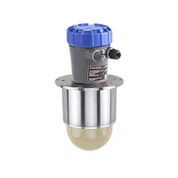
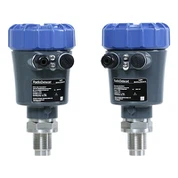
Differential Pressure Level Transmitter
Introducing our Differential Pressure Level Transmitter – the ultimate solution for measuring and monitoring liquid levels accurately and efficiently. Our product is equipped with advanced features that cater to a wide range of industrial applications. Here’s a list of its features that make it stand out from the rest:

- Product Introduction
Solidat Applied Technologies Ltd. is one of the leading manufacturers and suppliers of differential pressure level transmitter in China, also supports customized service. Please feel free to buy high quality products in stock here and get quotation from our factory. Good service and reasonable price are available.
Differential Pressure Level Transmitter Product Manual (With Selection, Installation & FAQ)
Introducing our Differential Pressure Level Transmitter – the ultimate solution for measuring and monitoring liquid levels accurately and efficiently. Our product is equipped with advanced features that cater to a wide range of industrial applications. It supports single-flange and double-flange optional configurations to adapt to diverse tank structures, working pressures, and medium characteristics. Below is a full product introduction including core features, advantages, applications, flange type selection comparison, installation guide with schematic illustration, and comprehensive calibration & operation FAQ.

Core Features
• High precision measurement
• Easy installation and calibration
• Industry-grade build quality
• Remote monitoring capabilities
• Low maintenance requirements
• Cost-effective solution
Product Advantages
• Accurate measurement ensures process efficiency
• Easy installation and calibration saves time and resources
• Durable and reliable build quality ensures continuous operation in harsh environments
• Remote monitoring capabilities enable real-time monitoring and analysis
• Low maintenance requirements reduce downtime and maintenance costs
• Cost-effective solution delivers value for money
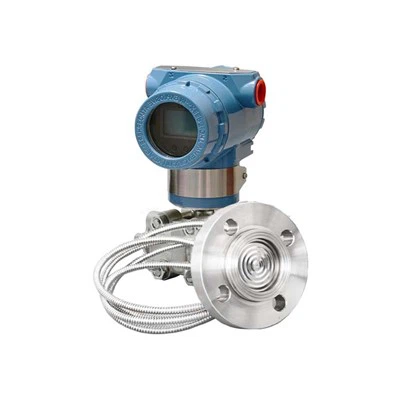

Typical Industrial Applications
Our Differential Pressure Level Transmitter is suited for a range of industrial applications that require accurate liquid level measurement. Some typical applications include:
• Chemical processing
• Oil and gas production
• Water treatment
• Pharmaceutical manufacturing
• Food and beverage processing
Single-Flange vs Double-Flange Selection Comparison
We provide two mainstream flange configurations to match different working conditions. The selection depends on tank type, operating pressure, medium property, and installation conditions, avoiding measurement drift or failure caused by incorrect model selection.
|
Comparison Item |
Single-Flange Differential Pressure Transmitter |
Double-Flange Differential Pressure Transmitter |
|
Structural Design |
Single-sided measuring diaphragm, negative pressure side open to atmosphere, no capillary structure, simple and compact structure |
Double-sided diaphragm + dual capillary filled with silicone oil, remote pressure transmission structure, independent positive and negative pressure sampling |
|
Applicable Working Conditions |
Open atmospheric tanks, low-pressure closed tanks; ideal for non-volatile, slightly corrosive, viscous, and easy-to-crystallize media |
Sealed pressure tanks, vacuum tanks, and reaction kettles; suitable for volatile, toxic, high-temperature, and strongly corrosive gas-liquid mixed working conditions |
|
Installation Requirements |
Only one opening at the bottom or side wall of the tank is needed, simple and fast installation |
Two openings at the upper and lower parts of the tank are required for dual-point sampling; capillary length and layout need standardized arrangement |
|
Temperature & Stability Performance |
Free of capillary temperature drift interference, small temperature measurement error, stable zero point |
Affected by ambient temperature difference of dual capillaries, requires temperature compensation and regular zero calibration for high precision |
|
Maintenance & Calibration |
Few components, simple on-site calibration, low daily maintenance difficulty and cost |
Complex structure with more components, migration and range calibration procedures are relatively complicated, requiring professional operation |
|
Cost Performance |
Low procurement and maintenance cost, high cost-effective for conventional atmospheric working conditions |
Higher procurement cost, suitable for high-demand sealed pressure working conditions with long-term stable operation |
|
Core Selection Suggestion |
Priority for open tanks, water treatment, conventional chemical viscous media scenarios |
Priority for sealed pressure vessels, oil & gas production, pharmaceutical closed reaction scenarios |
Installation Schematic & Standard Installation Instructions
1. Installation Schematic Description
Single-flange installation layout: The flange is horizontally installed on the side wall or vertically installed at the bottom of the open/ low-pressure tank. The diaphragm is flush with the tank inner wall to avoid medium accumulation and dead angles. The negative pressure end is directly connected to atmospheric pressure to collect liquid static pressure and convert it into liquid level signal.
Double-flange installation layout: The lower positive pressure flange is installed at the lowest measurable liquid level of the tank, and the upper negative pressure flange is installed above the highest liquid level (gas phase area). Dual capillaries are arranged in parallel with consistent bending radius and no extrusion or distortion. The transmitter body is installed at a horizontal height between the two flanges to reduce static pressure drift.
2. General Installation Specifications
Install the transmitter on a flat and firm mounting surface to avoid vibration and impact interference.
Flange sealing surface shall be clean and flat with complete gaskets to prevent leakage and ensure measurement tightness.
For double-flange models, capillary layout shall avoid high-temperature heat sources and strong wind exposure to reduce temperature difference error.
Keep the diaphragm free from scratches, extrusion and medium adhesion to ensure pressure sensing sensitivity.
Complete wiring sealing after installation to prevent dust and moisture from entering and damaging electrical components.

Comprehensive FAQ (Calibration, Installation & Daily Operation)
Calibration & Installation Special FAQ
Q1: Why does the transmitter show zero drift after installation?
Zero drift is mainly caused by installation position deviation, ambient temperature change, or uncompensated capillary static pressure. Solutions: Perform on-site zero migration calibration after installation; for double-flange models, ensure consistent capillary layout and avoid unilateral temperature difference; calibrate zero point again after temperature stabilization in new working environments.
Q2: How to complete range calibration correctly for different flange types?
For single-flange transmitters: After emptying the tank, calibrate the zero point (4mA output), then fill liquid to the full-scale height to calibrate the full value (20mA output). For double-flange transmitters: Conduct gas-phase zero calibration first to eliminate tank pressure interference, then perform liquid level full-scale calibration, and enable built-in temperature and static pressure compensation functions to ensure precision.
Q3: What causes slow response or inaccurate level data during operation?
Common causes include diaphragm adhesion of viscous media, blocked pressure sensing area, capillary extrusion or air bubble inside filled oil, and loose wiring. Solutions: Clean the diaphragm regularly to avoid scaling; check capillary integrity; tighten wiring terminals; recalibrate range if data deviation occurs.
Q4: Can double-flange transmitters be used for open atmospheric tanks?
It is technically usable but not recommended. Double-flange structure has higher cost and is susceptible to ambient temperature drift, resulting in unstable data. Open atmospheric tank scenarios are more suitable for single-flange models with simpler structure, lower error and higher cost performance.
Q5: What harsh environments can the transmitter adapt to?
Our industrial-grade Differential Pressure Level Transmitter supports high temperature, low temperature, humid, dusty and mildly corrosive working environments. The whole machine adopts waterproof and dustproof design, with stable operation in industrial continuous working conditions, and can resist medium corrosion and mechanical impact effectively.
Q6: Does the transmitter support remote real-time monitoring and data transmission?
Yes. It is equipped with standard 4-20mA signal output and supports docking with industrial PLC, DCS and remote monitoring systems. It realizes real-time liquid level data collection, remote data analysis and abnormal alarm, no need for on-site manual inspection, greatly improving operation efficiency.
Q7: What is the daily maintenance cycle and key maintenance points?
The daily maintenance cycle is recommended once a month for conventional working conditions, and once every two weeks for high-corrosion and high-viscosity medium scenarios. Key points: Regularly clean the diaphragm surface scaling, check flange sealing and capillary integrity, verify zero point and range accuracy regularly, and inspect wiring and grounding conditions to avoid signal interference.
Q8: How to choose the measuring range correctly for on-site working conditions?
The measuring range is determined by the maximum liquid level height and medium density of the tank. It is recommended to reserve 10%-20% margin on the basis of the actual maximum liquid level height to avoid full-scale overload. For double-flange models, confirm the distance between upper and lower flanges to match the effective measuring range, ensuring the liquid level changes within the valid sampling interval.
Conclusion
Our Differential Pressure Level Transmitter is a must-have product for industries that require accurate liquid level measurement. With optional single-flange and double-flange configurations, it perfectly adapts to open/closed, normal-pressure/pressure-bearing various working conditions. Featuring high precision, simple installation and calibration, durable industrial-grade quality, remote monitoring function and low maintenance cost, it delivers the perfect customized solution to meet your diverse industrial measurement needs. Invest in our product for a hassle-free and efficient industrial operation today!
Hot Tags: differential pressure level transmitter, China differential pressure level transmitter manufacturers, suppliers, factory, Differential Pressure Level Transmitter, Pressure Series, Capacitive Pressure Sensor, Pressure, Diaphragm Pressure Transmitter, Pressure Level Transmitter