




What is the signal strength of a Radar Tank Gauge?
 Aug 13, 2026|
 As a supplier of Radar Tank Gauges, I am often asked about the signal strength of these crucial instruments. The signal strength of a Radar Tank Gauge plays a pivotal role in its performance, accuracy, and reliability. In this blog, we will delve into what signal strength is in the context of Radar Tank Gauges, why it matters, and factors that influence it.
What is Signal Strength in Radar Tank Gauges?
Signal strength in a Radar Tank Gauge refers to the power of the radar signal transmitted and received by the gauge. When a Radar Tank Gauge operates, it emits a radar signal towards the surface of the liquid or solid material in the tank. This signal travels through the air or vapor space in the tank and reflects off the surface of the material. The gauge then detects the reflected signal and uses the time it takes for the signal to return to calculate the level of the material in the tank.
The strength of the transmitted signal and the received signal are both important. The transmitted signal needs to be strong enough to reach the surface of the material in the tank, even if the tank is large or there are obstacles in the way. The received signal, which is the reflected signal that comes back to the gauge, needs to be strong enough for the gauge to accurately detect and process it.
Why Does Signal Strength Matter?
Accuracy is one of the primary reasons why signal strength matters. A strong signal is more likely to be accurately detected and processed by the gauge. If the signal strength is too weak, the gauge may have difficulty distinguishing the reflected signal from background noise or interference. This can lead to inaccurate level measurements, which can be a significant problem in industries where precise inventory management and process control are crucial.

Reliability is another important factor. A radar gauge with a consistent and strong signal is more reliable in the long run. It is less likely to experience signal dropouts or interference, which can cause the gauge to malfunction or provide incorrect readings. This reliability is essential for applications where continuous and accurate monitoring of tank levels is required, such as in the oil and gas industry or chemical processing plants.
Factors Influencing Signal Strength
1. Distance to the Target
The distance between the radar gauge and the surface of the material in the tank is a critical factor. As the distance increases, the signal strength decreases. This is because the radar signal spreads out as it travels through the air, and some of the signal is absorbed or scattered by the air and any particles or vapor in the tank. For longer distances, a more powerful transmitted signal may be required to ensure that the reflected signal is strong enough to be detected.
2. Surface Characteristics
The characteristics of the surface of the material in the tank can also affect the signal strength. A smooth, flat surface reflects the radar signal more efficiently than a rough or uneven surface. For example, in a tank containing a liquid with a calm surface, the radar signal will be reflected more strongly than in a tank where the liquid is agitated or has a frothy surface. Additionally, the dielectric constant of the material can influence the signal reflection. Materials with higher dielectric constants generally reflect radar signals more strongly.
3. Environmental Conditions
The environment inside the tank can have a significant impact on signal strength. Factors such as temperature, pressure, humidity, and the presence of vapors or dust can all affect the transmission and reception of the radar signal. High temperatures can cause the signal to be absorbed or refracted more, reducing the signal strength. Vapors or dust in the tank can scatter the signal, making it more difficult for the gauge to detect the reflected signal.
4. Installation and Antenna Design
The proper installation of the radar gauge and the design of its antenna are also important for signal strength. If the gauge is not installed correctly, the radar beam may not be directed precisely at the surface of the material, resulting in a weaker reflected signal. The antenna design can affect the directionality and power of the transmitted signal. A well-designed antenna can focus the signal more effectively, increasing the signal strength at the target and improving the reception of the reflected signal.
Our Radar Tank Gauge Products and Signal Strength
At our company, we are committed to providing high-quality Radar Tank Gauges with excellent signal strength. Our products are designed to overcome the challenges posed by various factors influencing signal strength.
The SLDL5524 High Temperature Cable Guided Wave Radar is specifically engineered to operate in high-temperature environments. Its advanced design ensures that the radar signal can effectively penetrate the vapor space and reach the surface of the material in the tank, even at elevated temperatures. The cable-guided technology helps to maintain a strong signal, reducing the impact of distance and surface irregularities.
The SLDL5195 High Temperature and High Pressure Radar Level Gauge is suitable for applications where both high temperature and high pressure are present. It features a robust construction and a powerful radar signal to ensure accurate level measurements under extreme conditions. The gauge is designed to minimize the effects of environmental factors on signal strength, providing reliable performance in challenging industrial settings.
The SLDL5310 3D Radar Level Transmitter offers a unique 3D measurement capability. Its advanced antenna design allows for a wider coverage area and better signal distribution. This results in a stronger and more consistent signal, even in large tanks or tanks with complex geometries. The 3D technology also helps to reduce the influence of obstacles and surface irregularities on the signal.
The SLDL5283 Radar Level Gauges are known for their high accuracy and reliability. They are designed with a focus on optimizing signal strength. The gauges use advanced signal processing algorithms to enhance the detection of weak reflected signals, ensuring accurate level measurements even in difficult conditions.
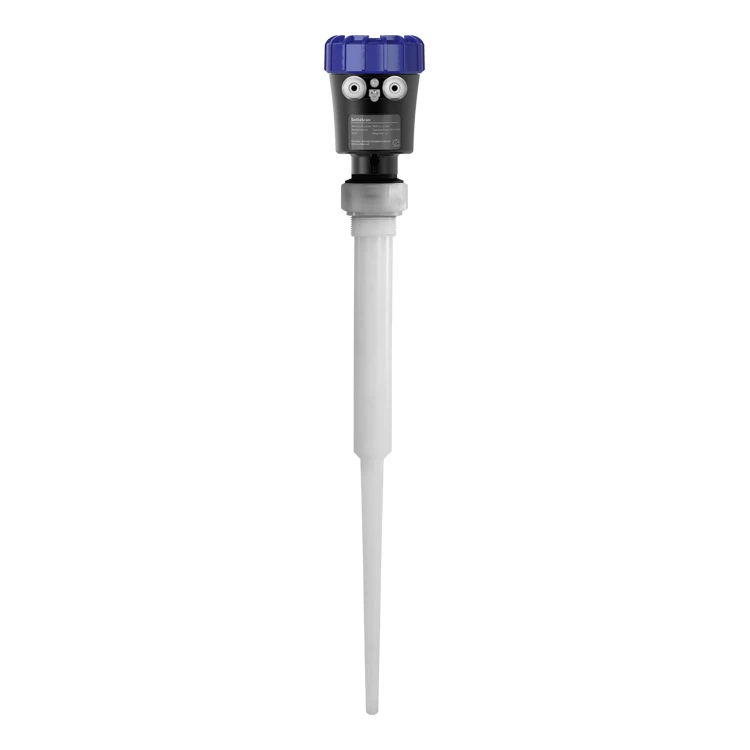
The SLDL5215 Rod-type Radar Level Meter is a compact and cost - effective solution. Its rod-type antenna design provides a focused radar signal, which is suitable for small to medium-sized tanks. The design helps to maintain a strong signal, reducing the impact of environmental factors and surface characteristics.
Conclusion
In conclusion, the signal strength of a Radar Tank Gauge is a critical parameter that affects its performance, accuracy, and reliability. Understanding the factors that influence signal strength is essential for ensuring the proper operation of these gauges in various industrial applications. Our range of Radar Tank Gauges, including the SLDL5524 High Temperature Cable Guided Wave Radar, SLDL5195 High Temperature and High Pressure Radar Level Gauge, SLDL5310 3D Radar Level Transmitter, SLDL5283 Radar Level Gauges, and SLDL5215 Rod-type Radar Level Meter, are designed to provide strong and reliable signals, ensuring accurate and consistent level measurements.
If you are interested in learning more about our Radar Tank Gauges or would like to discuss a potential purchase, we encourage you to reach out to us. Our team of experts is ready to assist you in finding the right solution for your specific needs.
References
- "Radar Technology for Industrial Level Measurement" - Industrial Instrumentation Handbook
- "Principles of Radar Level Gauging" - Elsevier Publications