




What is the maximum flow capacity of a Butterfly Valve?
 Oct 16, 2026|
 If you’ve ever stopped to watch a butterfly valve in action—guiding water through a municipal water treatment plant, controlling chemical flow in a pharmaceutical facility, or managing gas movement in a pipeline—you might’ve wondered how much fluid these compact, reliable valves can actually move. As a butterfly valve supplier who’s spent years troubleshooting flow issues and matching valves to unique process needs, I get this question all the time: “What is the maximum flow capacity of a butterfly valve?” It’s not a one-size-fits-all answer, actually. The capacity depends on a mix of design, material, sizing, and the specific fluid you’re moving, and understanding this is key to picking the right valve for your system without overspending or causing flow bottlenecks.
First, let’s ground this in basic valve design. A butterfly valve works by rotating a thin, disc-shaped disc inside the valve body; when fully open, the disc sits parallel to the flow path, creating minimal obstruction. That’s why they’re far more efficient at moving fluids than, say, a ball valve or globe valve in many large-diameter applications. But maximum flow capacity isn’t just about how big the valve is—it’s calculated using flow coefficient (Cv) values, the industry standard for measuring a valve’s ability to pass fluid. Cv is defined as the number of U.S. gallons per minute (GPM) of 60°F water that flows through a fully open valve with a pressure drop of 1 psi across it. For butterfly valves, Cv values scale almost linearly with pipe diameter, which is why they’re a go-to for high-flow, low-pressure systems.
Let’s break down typical maximum flow ranges by valve size, since that’s the most common way suppliers and engineers reference capacity. For a 2-inch butterfly valve, maximum Cv is around 80 GPM, translating to roughly 80 GPM of water (or equivalent for other fluids) at a 1 psi pressure drop. A 4-inch valve jumps to about 500 GPM, a 6-inch to 1,200 GPM, a 10-inch to 3,500 GPM, and a 24-inch butterfly valve can hit a staggering 22,000 GPM when fully open. That’s a huge range, but these numbers shift based on two big factors: valve type and material lining/sealing.
If you’re handling corrosive fluids, for example, a standard cast-iron valve won’t cut it—you need a material that resists chemical damage. That’s where a PTFE Lined Butterfly Valve comes in. PTFE (Teflon) lining isn’t just for corrosion resistance; it creates a smooth, low-friction surface that reduces turbulence, which in turn boosts flow capacity. Unlined metal valves can have slightly higher friction and minor obstructions at the disc-seat interface, so a properly lined PTFE valve can have a Cv value 5-10% higher than an unlined equivalent of the same size. That’s a meaningful difference in high-flow applications where every GPM counts. PTFE lining is also ideal for food and beverage, pharmaceutical, and chemical industries, where contamination is a risk—so if your process calls for sanitary operation, a lined butterfly valve is a double win for capacity and reliability.
Another key factor affecting maximum flow is actuation. Manual butterfly valves are great for small, low-frequency systems, but for large, automated pipelines, you’ll want pneumatic operation to open and close the valve quickly and consistently. A Pneumatic Operated Butterfly Valve doesn’t change the disc design or pipe size, so its base maximum flow capacity is the same as a manual valve of the same dimensions, but actuation ensures the disc fully opens every time—no partial openings that limit flow. Inconsistent disc position is one of the most overlooked causes of reduced flow in butterfly valve systems; even a half-open disc cuts capacity by more than 70% in most cases, so reliable actuation is non-negotiable for hitting peak flow. For critical applications like fire protection systems or wastewater treatment, pneumatic actuation also offers fast response times, which is an added bonus that doesn’t sacrifice flow capacity when paired with a properly sized valve.
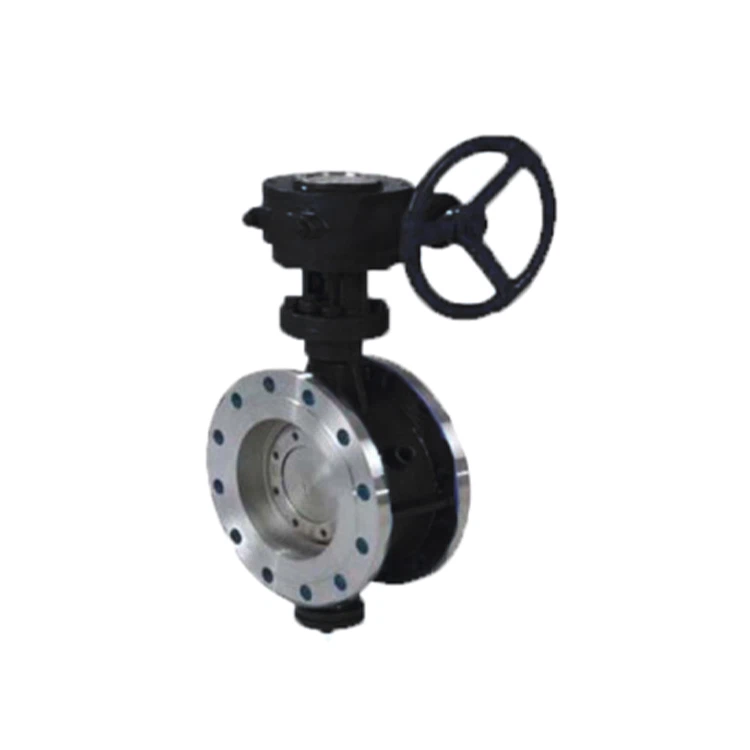

Valve end connection type also plays a small, but important, role in flow capacity. Flange Type Butterfly Valves, for example, are bolted directly to pipe flanges, creating a tight, uniform connection between the valve and the pipe. Slip-on or threaded end valves can have minor dimensional inconsistencies at the joint, leading to slight flow disruption at the inlet or outlet of the valve. While this difference is usually less than 3% for properly installed valves, it adds up in very large diameter systems where flow is measured in thousands of GPM. Flange-type valves also offer better pressure ratings, so you can use a larger valve without risking leaks that would force you to restrict flow or shut down the system entirely. That’s why many operators in heavy industry prefer flange-type butterfly valves for maximum capacity applications—they balance flow efficiency with long-term reliability.
Now, let’s get real-world. Last year, I worked with a municipal water treatment plant that was struggling to keep up with peak summer demand when park and pool usage surged. They were using 18-inch unlined butterfly valves that were sized for average flow, not peak demand. Their maximum capacity was around 15,000 GPM, but they needed 18,000 GPM to meet the seasonal spike. We swapped their old valves for 18-inch PTFE lined butterfly valves—same pipe size, different lining. The higher flow coefficient from the PTFE lining pushed their maximum capacity to almost 16,500 GPM, enough to cover their peak needs without upgrading the entire pipe infrastructure, saving them tens of thousands of dollars in retrofitting costs. That’s the kind of practical knowledge suppliers bring to the table: understanding that maximum flow isn’t just about size, it’s about matching the valve to the fluid and system demands.
Of course, there are limits to how much capacity you can get from a butterfly valve. The disc itself creates a minimum obstruction, so even the best designed butterfly valve will never match the Cv of a fully open gate valve of the same size. But for most applications—from 2-inch domestic water lines to 48-inch industrial pipelines—butterfly valves offer a near-ideal balance of flow capacity, cost, and space. Another common limit is pressure rating; butterfly valves have different pressure classes (150, 300, 600 psi, etc.), and maximum flow capacity drops slightly at higher pressure. For example, a 10-inch 150-rated butterfly valve has a Cv of ~3,500, while a 10-inch 600-rated valve has a Cv of ~3,200, a small tradeoff for the ability to handle higher system pressure.
Temperature also matters, especially with lined valves like PTFE. PTFE can handle temperatures up to around 500°F, but as temperature rises above that, the lining softens, which can create slight gaps between the disc and seat, reducing flow capacity and seal integrity. For high-temperature applications, you’ll want a metal-seated butterfly valve, which maintains consistent flow even at temperatures over 1,000°F, though their Cv values are slightly lower than PTFE lined valves for the same size. As a supplier, I always ask clients about their fluid type, temperature, pressure, and required flow rate first, because those details determine which valve will hit their maximum capacity without compromising performance.
If you’re still trying to calculate your system’s needs, here’s a quick rule of thumb: for water-based fluids, maximum GPM is approximately equal to the valve’s nominal size in inches multiplied by 1,000. So a 10-inch valve has a rough maximum capacity of ~10,000 GPM, a 20-inch valve ~20,000 GPM, and so on. For thicker fluids like oil or chemicals, multiply that number by 0.7 to 0.9, since higher viscosity reduces flow capacity. This is a great starting point, but always check the manufacturer’s Cv data, because different valve designs can shift these numbers.
At the end of the day, choosing the right butterfly valve for maximum flow is about more than just picking the largest valve you can fit. It’s about matching the lining, actuation, and end connections to your specific process needs. If you’re not sure which valve will give you the flow you need without unnecessary costs, I’m here to help. We work with clients across industries to size butterfly valves, calculate flow capacity, and source the exact valve that fits their unique requirements. Whether you need a PTFE lined butterfly valve for corrosive chemical handling, a pneumatic operated butterfly valve for automated process control, or a flange type butterfly valve for heavy industrial pipelines, we have the expertise and products to get your system running at peak flow. Reach out to our team today to discuss your flow needs—we’re happy to help you find the right solution.
References
- American Water Works Association. (2019). Valve Selection and Sizing for Water Systems. AWWA Press.
- Fluid Controls Institute. (2021). Flow Coefficient (Cv) Standards for Industrial Valves. FCI Publication 70-21.
- Miller, J. (2020). Butterfly Valves: Design, Application, and Performance. Elsevier Science.
- PTFE Lined Valve Material Compatibility Guide. (2022). Valve Manufacturing Association (VMA).