





Solidat Electromagnetic Flowmeter Features and Applications
 Nov 18, 2025|

Abstract
The MagFlow electromagnetic flowmeter is based on Faraday's law of electromagnetic induction. The two electromagnetic coils at its ends generate a constant or alternating magnetic field. When conductive media flows through the electromagnetic flowmeter, an induced electromotive force (EMF) can be detected between the left and right electrodes on the inner wall of the flowmeter tube. The magnitude of this induced EMF is proportional to the flow velocity of the conductive media, the magnetic flux density of the magnetic field, and the conductor width (the inner diameter of the flowmeter's measuring tube). Flow rate can then be calculated through further computation. This article focuses on the indispensable flow measurement technology in process industries – the electromagnetic flowmeter. It elaborates on its measurement principle, compares the characteristics of different structural types of electromagnetic flowmeters, and highlights the application solutions provided by the full range of electromagnetic flowmeter products launched by Solidat under various complex working conditions. It serves as a professional reference for addressing flow measurement challenges in industries such as chemical, water treatment, food, and pharmaceuticals.
Keywords
Electromagnetic Flowmeter; Integral Type; Remote Type; Insertion Type; Sanitary/Clamp Type; High-Pressure Type; Battery Powered; Flow Measurement
1. Overview
In the automation control and energy management of process industries, accurate fluid measurement is the cornerstone for process optimization, cost control, and safe production. Traditional flow measurement methods such as orifice plates and turbines suffer from issues like high-pressure loss, susceptibility to wear, and high maintenance requirements, showing significant limitations especially when measuring conductive liquids. Based on Faraday's law of electromagnetic induction, electromagnetic flowmeters have become the preferred solution for conductive liquid flow measurement due to advantages such as no obstructions inside the measuring tube, zero pressure loss, high measurement accuracy, and good stability.
However, different application scenarios pose diverse challenges for flowmeters: highly corrosive media in the chemical industry, large-diameter pipe measurement in water treatment, stringent hygiene requirements in the food and pharmaceutical industries, lack of power sources in field pipeline networks, and high-pressure conditions in petroleum exploration all require tailored solutions. Solidat, with a deep understanding of market needs, has launched a complete electromagnetic flowmeter product matrix ranging from the SLDF7110 (Integral Type) to the SLDF7160 (Battery Powered Type). With flexible structural design and excellent performance, it meets all measurement needs from routine to extreme.
2. Characteristics of Different Electromagnetic Flowmeter Technologies
2.1 Characteristics of Integral and Remote Type Electromagnetic Flowmeters
SLDF7110 Integral Type Electromagnetic Flowmeter: Integrates the sensor and transmitter into a single unit, featuring a compact structure, convenient installation and wiring, and space savings. Its default protection rating is IP65, suitable for conventional working conditions with moderate ambient temperature (-10°C to +55°C), minimal pipeline vibration, and easy observation and operation. It is a cost-effective choice for measuring clean water, wastewater, circulating water, etc.
SLDF7120 Remote Type Electromagnetic Flowmeter: Features separate installation of the sensor and transmitter, connected via a dedicated cable. This design allows it to cope with harsher environments. When the installation site has high temperature (ambient temperature >55°C or high media temperature), strong pipeline vibration, high humidity, or corrosive gases, or when the flowmeter is installed in locations inconvenient for debugging such as high altitudes or underground pits, the remote type structure allows the transmitter to be installed in a control room or safe location away from the harsh environment, significantly improving system reliability and service life. Its sensor part has a default high protection rating of IP68.
2.2 Characteristics of Special Application Electromagnetic Flowmeters
SLDF7130 Insertion Type Electromagnetic Flowmeter: Specifically designed for large-diameter pipelines from DN100 to DN3000, especially for water supply and drainage pipeline networks where production cannot be stopped. Its greatest advantage is that installation and maintenance do not require cutting the process pipeline; "hot swapping" can be achieved by drilling a hole in the pipeline, greatly reducing installation costs and impact on production. It addresses the pain point of high cost associated with large pipeline flow measurement.
SLDF7140 Sanitary/Clamp Type Electromagnetic Flowmeter: Designed for the strict hygiene standards of the food, beverage, and pharmaceutical industries. It features smooth, seamless linings (e.g., PTFE, PFA) and quick-disconnect clamp-type connections to ensure no residue and easy cleaning, fully adapting to CIP (Cleaning-in-Place) and SIP (Steam-in-Place) processes. Its structure ensures product safety and avoids contamination risks.
SLDF7150 High-Pressure Type Electromagnetic Flowmeter: Built for measuring liquid-solid two-phase media like high-pressure water injection, mud, and slurry in petroleum, geological, and oilfield systems. Utilizing special lining technology and a robust sensor structure, it can withstand extreme pressures up to 42MPa, maintaining measurement stability and reliability under strong impact and harsh conditions.
SLDF7160 Battery Powered Electromagnetic Flowmeter: Innovatively employs an internal battery for power supply, completely solving the measurement challenges in field scenarios such as urban water supply networks and agricultural irrigation where grid coverage is absent or power supply is difficult. Combined with ultra-low power consumption design, it enables long-term unattended operation, providing a key tool for data monitoring and trade settlement in smart water systems.
3. Principle of Electromagnetic Flowmeters
The working principle of the electromagnetic flowmeter is based on Faraday's law of electromagnetic induction. As shown in the figure below, electromagnetic coils on both sides of the measuring tube generate a constant or alternating magnetic field (B). When conductive liquid flows through the measuring tube at velocity (V), it cuts the magnetic flux lines, generating an induced electromotive force (E). This EMF is detected by two electrodes symmetrically placed on the tube wall. The magnitude of the induced EMF (E) is proportional to the magnetic flux density (B), the conductor width (i.e., the inner diameter D of the measuring tube), and the flow velocity (V), expressed as E = k * B * D * V. By measuring E, the flow velocity V can be calculated, thereby obtaining the volumetric flow rate. Since the measurement process is independent of the fluid's temperature, pressure, density, and viscosity, as long as the fluid's conductivity exceeds a threshold (typically ≥5 μS/cm), extremely high measurement accuracy can be achieved.
4. Solidat Electromagnetic Flowmeter Introduction and Applications
4.1 Core Technical Features
Solidat MagFlow series electromagnetic flowmeters possess the following core technical advantages, ensuring excellent performance in various applications:
High Accuracy and Stability: Utilizing high-performance VLSI chips and modern signal processing technology, signals are isolated, filtered, amplified, and digitally processed. Basic error can reach ±0.5% or even ±0.2%.
Powerful Communication Functions: Comprehensive support for various industrial communication protocols such as HART, Modbus, Profibus PA, and Foundation Fieldbus, enabling easy integration into control systems.
High Adaptability: Offers a variety of electrode materials (e.g., 316L, Hastelloy, Titanium, Tantalum) and lining materials (e.g., Rubber, PTFE, PFA) to adapt to different corrosion, abrasion, and temperature requirements.
4.2 Typical Industry Application Cases
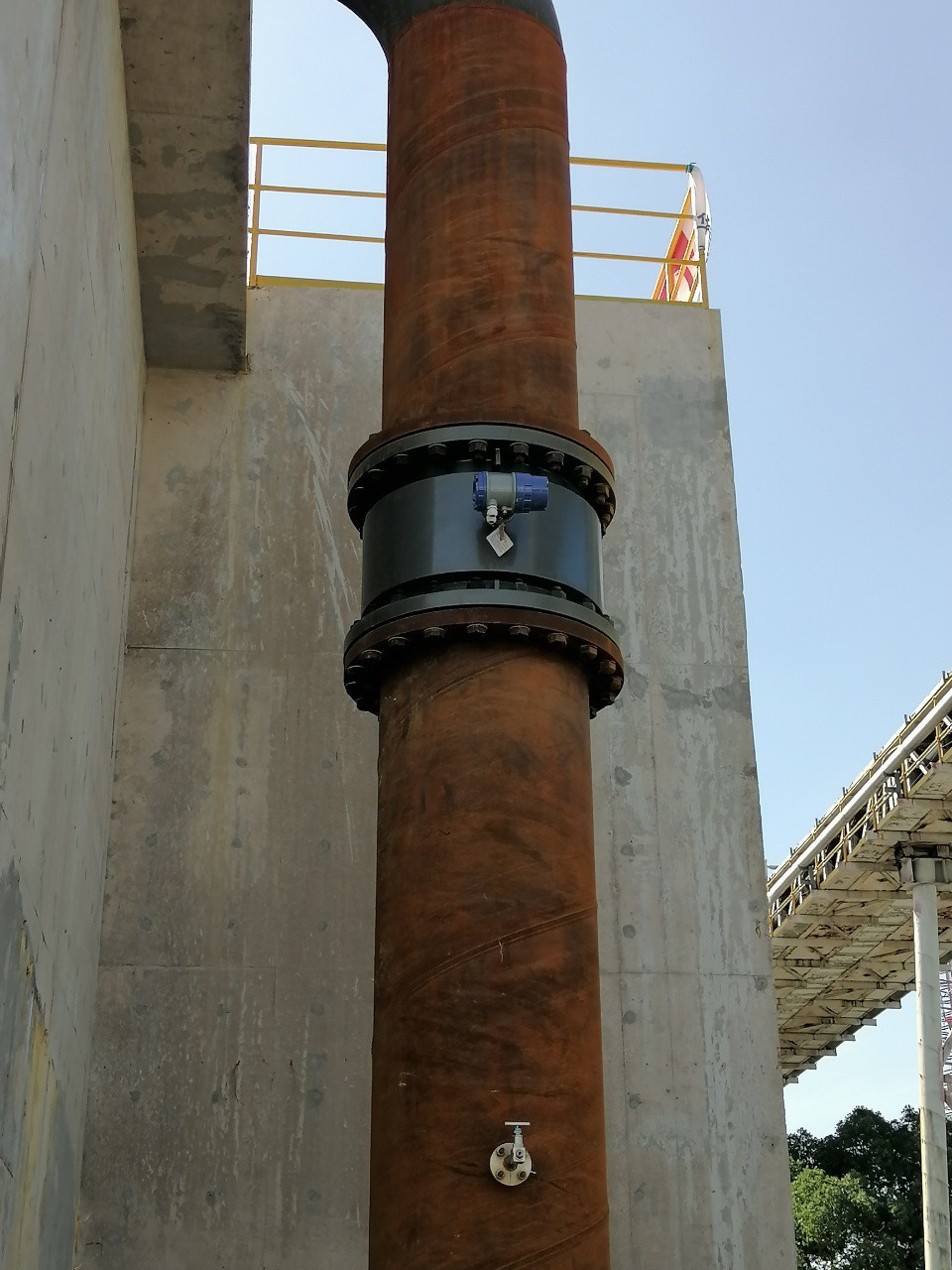
Case One: Power Industry Circulating Water System Monitoring
Application Scenario: Circulating cooling water system in Huadian Suzhou Wangting Project.
Technical Characteristics: Used SLDF7110 Integral Type electromagnetic flowmeter, measuring pipe diameter DN200.
Results: Significantly reduced installation costs and provided precise data support for leak control.
Case Two: Chemical Industry Corrosive Media Measurement
Application Scenario: Sulfuric acid transfer pipeline in a chemical plant.
Technical Characteristics: Selected SLDF7120 Remote Type structure, equipped with Tantalum electrodes and PTFE lining.
Results: Achieved long-term stable measurement under strong corrosive media, reducing annual maintenance costs by 40%.
Case Three: Municipal Water Supply Pipeline Network Monitoring
Application Scenario: Urban main water supply pipeline network.
Technical Characteristics: Used SLDF7130 Insertion Type electromagnetic flowmeter, supporting installation without production stoppage.
Results: Significantly reduced installation costs and provided precise data support for leak control.

5. Conclusion
Through its comprehensive product series, innovative structural design, and robust, durable performance, Solidat electromagnetic flowmeters effectively address diverse measurement challenges in process industries, such as "corrosive media, large diameters, hygiene requirements, high pressure, lack of power sources." From conventional water treatment to demanding chemical measurements, from clean food production lines to field pipeline networks, Solidat provides accurate, reliable, and economical solutions. Their excellent communication capabilities further provide a solid data foundation for the construction of Industry 4.0 and smart factories. As process industries continuously demand higher measurement accuracy and automation levels, Solidat electromagnetic flowmeters are destined to play an increasingly important role, becoming a trusted partner for users.